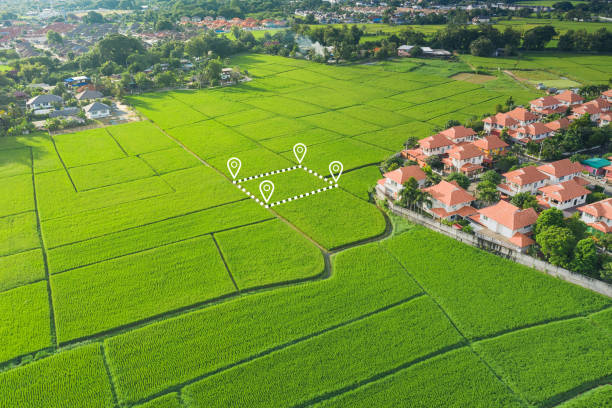
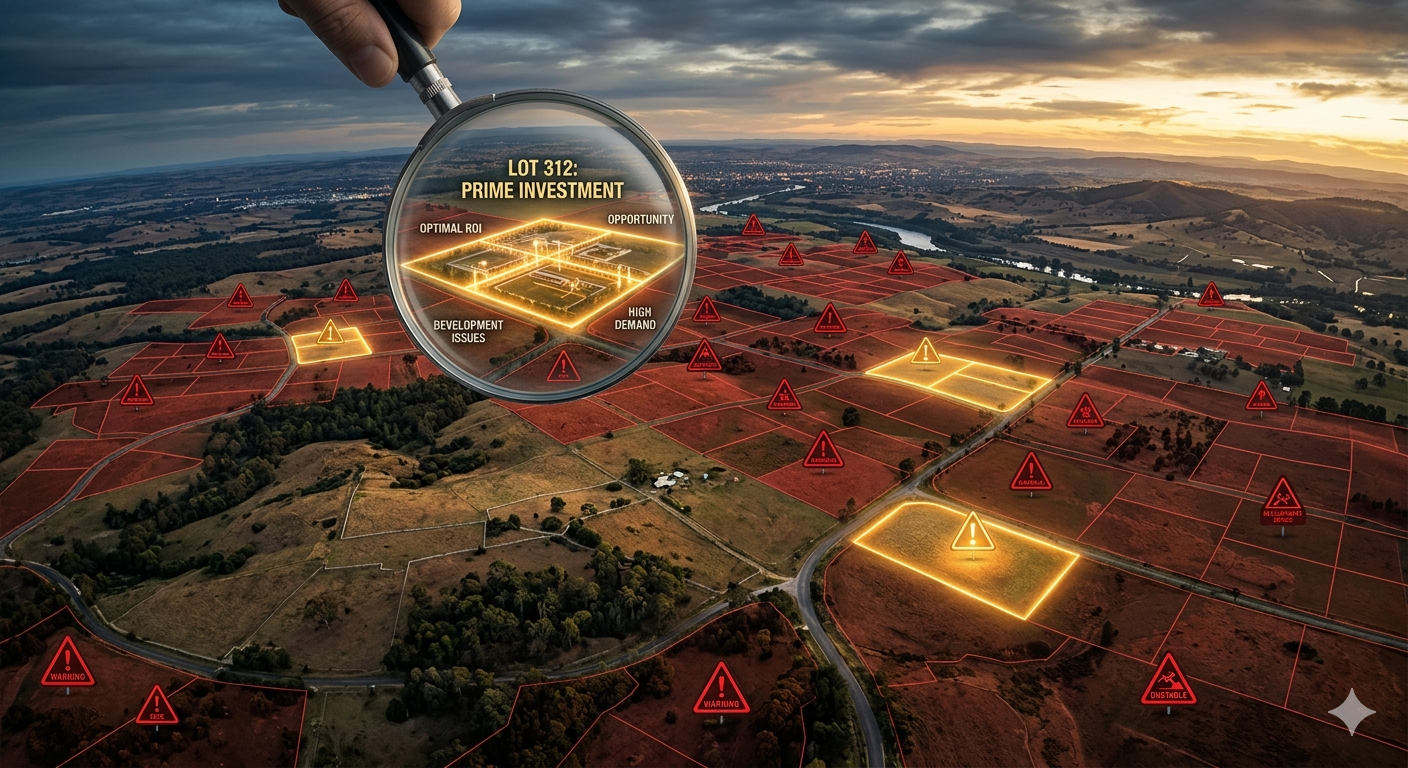
Why do we reject 90% of land parcels before even reaching till customers?
Land investment sounds like an easy business. There are no tenants to deal with, and we do not have to invest in repairs because all we do is buy land, wait, and make money from it. However, this business usually crashes when an issue occurs.
We're working with land every day. And one thing surprises most people: “We say ‘NO’ to almost 9 out of 10 of all land deals we see. Not because we think the land does not look good, nor because we think it is too expensive. But simply because we think most of the land is risky, and we have seen many of our client's previous experiences that they share with us, and we are standing by their side in their struggling periods.”
Let’s explain this further.
1. Legal Problems
Many lands have most of the tough legal problems, as these lands don’t really belong to anyone. The papers, such as the transfer agreement, 7/12 of the land, etc., may not be available in some cases. Quite often, the problem occurs due to the confusing ownership, as it is owned by more than one person, and in such cases, the owner loses ownership of the land with the help of false documents. A good example includes a situation where the claimants are brother, sister, and family members at the time of selling the lands. The legal issue of the older cases is an unseen problem that exists in the field and is considered a legal problem, but at the time of land registration, it goes unseen by the people. Though the lands may be sold at a low price, your money might get stuck for a long period.
Cheap land + legal problems = big headache.
2. Permission Problems
There are some areas of land which cannot be used the way people think they should be used to, e.g., you cannot use the land to build on it, as the owner of the land, yet the usage of the land is not clear, or the permission for usage of the land is ‘coming soon’, but might never come. If the rules are not clear today and you buy the land, it is like gambling on luck; sometimes you may get lucky and win the jackpot, but most often, you may not get the luck you want to win the jackpot. Similarly, if you are granted permission, then naturally, you are lucky, but on the other side of the coin, if the luck does not go your way, your luck may be 9 out of 10 to be ditched by luck.
3. No Proper Road
Many people don't know that many of those lands are not approved to have any form of legal access to drive through to reach that land, hence when one chooses to build a house on such land, it does not give a return on investment, as it refers to landlocked property, where there is no access to drive through a road to reach that land to drive your car to the land, which ultimately leads to many problems, such as you can't easily sell it, and people do not even want to buy it, because land without any road access is like a genius without idea.
4. Paper Says One Thing, Reality Says Another
When on the paper map, the shape of the land could look perfectly suitable for our aspirations, and we end up purchasing the land. However, on the actual site visit, there could be the possibility of understanding that the boundaries of the land could be different from what we could see on the map. The worst could be that the shape of the actual land would be such that we would not be able to have our dream villa constructed on that land. If the procedure of possession of the land does not happen as we think, then we will never be able to fix things with the use of paper.
5. No Growth in the Future
We buy land as an asset since we know that the land is growing conclusively and is in a growth corridor, and at this point, we become aware that the asset will provide a higher ROI compared to what we invested in but at that point, we also become aware of the fact that the land we bought had no future development as had been guaranteed by the dealer just then we also realize that we are MIRED, with no roads being built, no jobs or business being created in proximity to our land or any future development plans being created. What looks like a bargain today can quietly erode real wealth, and low cost alone never promises future value.
Why Are We So Strict?
As we had read above, one single mistake not only remains a mistake, but it also acts as a warning of the loss that we are going to face in the near future. Since the investment done doesn’t hit us immediately, we would realize that after a certain amount of time, when the area near by doesn’t develop as it should, then the investment would start damaging our lives hard because our money gets stuck in these agreements and cannot be sold to others, which creates a stress of thinking that the wealth we had spent doesn’t return any amount. Since most people don’t really end up losing money in a land-based investment because it’s not a good idea to invest in land, most end up losing money because they didn’t investigate properly and just relied on the word of mouth of the developer.
"If you're considering purchasing land, keep in mind that everything needs to be thoroughly examined (or enlist the help of a professional who specialises in this field and is aware of all the problems that you can face)." and think thrice about 'what if it all goes wrong?' Because people who are patient and look carefully for flaws, land investment is a mine of gold for them. And people who rush it end up losing every penny." Sharing this with the person you care about and who happens to believe that he doesn’t need to learn the truth about land investment the hard way.
Digital land is not about quick trends or instant returns; it is about owning a permanent space on the internet where ideas flourish, trust builds, and value accumulates over time. Similar to physical land, digital land rewards those who exhibit patience, clarity, and a long-term vision. Every post, insight, and experience shared in this space aims to educate, simplify decision-making, and encourage readers to look beyond immediate gains. This platform emphasises real-world perspectives, practical knowledge, and sustainable thinking, creating digital assets that remain relevant, searchable, and valuable for years to come.
We're working with land every day. And one thing surprises most people: “We say ‘NO’ to almost 9 out of 10 of all land deals we see. Not because we think the land does not look good, nor because we think it is too expensive. But simply because we think most of the land is risky, and we have seen many of our client's previous experiences that they share with us, and we are standing by their side in their struggling periods.”
Let’s explain this further.
1. Legal Problems
Many lands have most of the tough legal problems, as these lands don’t really belong to anyone. The papers, such as the transfer agreement, 7/12 of the land, etc., may not be available in some cases. Quite often, the problem occurs due to the confusing ownership, as it is owned by more than one person, and in such cases, the owner loses ownership of the land with the help of false documents. A good example includes a situation where the claimants are brother, sister, and family members at the time of selling the lands. The legal issue of the older cases is an unseen problem that exists in the field and is considered a legal problem, but at the time of land registration, it goes unseen by the people. Though the lands may be sold at a low price, your money might get stuck for a long period.
Cheap land + legal problems = big headache.
2. Permission Problems
There are some areas of land which cannot be used the way people think they should be used to, e.g., you cannot use the land to build on it, as the owner of the land, yet the usage of the land is not clear, or the permission for usage of the land is ‘coming soon’, but might never come. If the rules are not clear today and you buy the land, it is like gambling on luck; sometimes you may get lucky and win the jackpot, but most often, you may not get the luck you want to win the jackpot. Similarly, if you are granted permission, then naturally, you are lucky, but on the other side of the coin, if the luck does not go your way, your luck may be 9 out of 10 to be ditched by luck.
3. No Proper Road
Many people don't know that many of those lands are not approved to have any form of legal access to drive through to reach that land, hence when one chooses to build a house on such land, it does not give a return on investment, as it refers to landlocked property, where there is no access to drive through a road to reach that land to drive your car to the land, which ultimately leads to many problems, such as you can't easily sell it, and people do not even want to buy it, because land without any road access is like a genius without idea.
4. Paper Says One Thing, Reality Says Another
When on the paper map, the shape of the land could look perfectly suitable for our aspirations, and we end up purchasing the land. However, on the actual site visit, there could be the possibility of understanding that the boundaries of the land could be different from what we could see on the map. The worst could be that the shape of the actual land would be such that we would not be able to have our dream villa constructed on that land. If the procedure of possession of the land does not happen as we think, then we will never be able to fix things with the use of paper.
5. No Growth in the Future
We buy land as an asset since we know that the land is growing conclusively and is in a growth corridor, and at this point, we become aware that the asset will provide a higher ROI compared to what we invested in but at that point, we also become aware of the fact that the land we bought had no future development as had been guaranteed by the dealer just then we also realize that we are MIRED, with no roads being built, no jobs or business being created in proximity to our land or any future development plans being created. What looks like a bargain today can quietly erode real wealth, and low cost alone never promises future value.
Why Are We So Strict?
As we had read above, one single mistake not only remains a mistake, but it also acts as a warning of the loss that we are going to face in the near future. Since the investment done doesn’t hit us immediately, we would realize that after a certain amount of time, when the area near by doesn’t develop as it should, then the investment would start damaging our lives hard because our money gets stuck in these agreements and cannot be sold to others, which creates a stress of thinking that the wealth we had spent doesn’t return any amount. Since most people don’t really end up losing money in a land-based investment because it’s not a good idea to invest in land, most end up losing money because they didn’t investigate properly and just relied on the word of mouth of the developer.
"If you're considering purchasing land, keep in mind that everything needs to be thoroughly examined (or enlist the help of a professional who specialises in this field and is aware of all the problems that you can face)." and think thrice about 'what if it all goes wrong?' Because people who are patient and look carefully for flaws, land investment is a mine of gold for them. And people who rush it end up losing every penny." Sharing this with the person you care about and who happens to believe that he doesn’t need to learn the truth about land investment the hard way.
Digital land is not about quick trends or instant returns; it is about owning a permanent space on the internet where ideas flourish, trust builds, and value accumulates over time. Similar to physical land, digital land rewards those who exhibit patience, clarity, and a long-term vision. Every post, insight, and experience shared in this space aims to educate, simplify decision-making, and encourage readers to look beyond immediate gains. This platform emphasises real-world perspectives, practical knowledge, and sustainable thinking, creating digital assets that remain relevant, searchable, and valuable for years to come.